
 購物車
購物車 
-
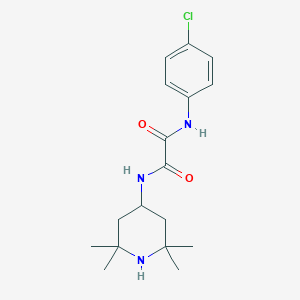
NBD-556
- names:
NBD-556
- CAS號:
333353-44-9
MDL Number: MFCD00469538 - MF(分子式): C17H24ClN3O2 MW(分子量): 337.84
- EINECS:No data available Reaxys Number:No data available
- Pubchem ID:1570601 Brand:BIOFOUNT
| 貨品編碼 | 規格 | 純度 | 價格 (¥) | 現價(¥) | 特價(¥) | 庫存描述 | 數量 | 總計 (¥) |
|---|---|---|---|---|---|---|---|---|
| YZM000666-10mg | 10mg | 99.58% | ¥ 1129.00 | ¥ 1129.00 | 2-3天 | ¥ 0.00 | ||
| YZM000666-5mg | 5mg | 99.58% | ¥ 580.13 | ¥ 580.13 | 2-3天 | ¥ 0.00 |
| 中文別名 | NBD-556(333353-44-9);NBD 556;NBD-556;NBD556;N-(4-氯苯基)-N'-(2,2,6,6-四甲基哌啶-4-基)草酰胺; |
| 英文別名 | NBD-556(333353-44-9);NBD 556;NBD-556;NBD556;N-(4-chlorophenyl)-N'-(2,2,6,6-tetramethylpiperidin-4-yl)oxalamide |
| CAS號 | 333353-44-9 |
| Inchi | InChI=1S/C17H24ClN3O2/c1-16(2)9-13(10-17(3,4)21-16)20-15(23)14(22)19-12-7-5-11(18)6-8-12/h5-8,13,21H,9-10H2,1-4H3,(H,19,22)(H,20,23) |
| InchiKey | ZKXLQCIOURANAD-UHFFFAOYSA-N |
| 分子式 Formula | C17H24ClN3O2 |
| 分子量 Molecular Weight | 337.84 |
| 溶解度Solubility | 生物體外In Vitro:DMSO溶解度33.33 mg/mL(98.66 mM;Need ultrasonic)H2O< 0.1 mg/mL(insoluble) |
| 性狀 | 白色至米色固體粉末,Power |
| 儲藏條件 Storage conditions | 2-8°C°, 3 years年 4°C 2 years年 / In solvent溶液中:-80°C 6 months月 -20°C 1 month月 |
NBD-556(333353-44-9)實驗注意事項:
1.實驗前需戴好防護眼鏡,穿戴防護服和口罩,佩戴手套,避免與皮膚接觸。
2.實驗過程中如遇到有毒或者刺激性物質及有害物質產生,必要時實驗操作需要手套箱內完成以免對實驗人員造成傷害
3.實驗后產生的廢棄物需分類存儲,并交于專業生物廢氣物處理公司處理,以免造成環境污染Experimental considerations:
1. Wear protective glasses, protective clothing and masks, gloves, and avoid contact with the skin during the experiment.
2. The waste generated after the experiment needs to be stored separately, and handed over to a professional biological waste gas treatment company to avoid environmental pollution.
Tags:NBD-556試劑,NBD-556雜質,NBD-556中間體,NBD-556密度,NBD-556旋光度,NBD-556溶解度,NBD-556閃點,NBD-556熔點,NBD-556購買,NBD-556結構式,
| 產品說明 | NBD-556(333353-44-9)是CD4的小分子模擬物,能識別HIV-1包膜蛋白gp120。 |
| Introduction | NBD56(333353-44-9) is small molecule mimetic of CD4, NBD56 recognizes the HIV envelope protein gp120 and induces restructuring of gp120 analogous to CD4 binding.IC50 Value: |
| Application1 | NBD-556是一種N-苯基-N'-(2,2,6,6-四甲基哌啶-4-基)-草酰胺類似物,是一類新型的人類免疫缺陷病毒1型(HIV-1)進入抑制劑, 阻止gp120-CD4相互作用。 |
| Application2 | NBD-556 is a N-phenyl-N'-(2,2,6,6-tetramethyl-piperidin-4-yl)-oxalamide analog, a novel class of human immunodeficiency virus type 1 (HIV-1) entry inhibitors that block the gp120-CD4 interaction. |
| Application3 |
NBD-556(333353-44-9)藥理學:
※NBD-556是CD4的小分子模擬物,NBD-556識別HIV-1包膜蛋白gp120,并誘導gp120的重組,類似于CD4結合。IC50值:目標人群:HIV NBD-556 N-苯基-N'-(2,2,6,6-四甲基哌啶-4-基)-草酰胺類似物,是新型的1類人類免疫缺陷病毒(HIV-1 )可阻止gp120-CD4相互作用的進入抑制劑。人免疫缺陷病毒(HIV-1)與主要受體CD4的相互作用會誘導病毒包膜糖蛋白的構象變化,從而使蛋白與CCR5第二受體結合,并使病毒進入宿主細胞。小分子NBD-556通過結合gp120外膜糖蛋白來模擬CD4。
※NBD-556是CD4模擬物(IC50值在低微摩爾范圍內,取決于細胞類型和HIV株)。識別并誘導HIV-1包膜蛋白gp120中的結構變化,類似于CD4結合。通過阻止病毒細胞和細胞-細胞融合,抑制HIV-1細胞進入CXCR4和CCR5表達細胞系。
※NBD-556是CD4的小分子模擬物,NBD-556識別HIV-1包膜蛋白gp120并誘導gp120的重組,類似于CD4結合。IC50值:; 目標:艾滋病毒;NBD-556 N-苯基-Nα-(2,2,6,6-四甲基-哌啶-4-基)-草酰胺類似物是一類新型的人類免疫缺陷病毒1型(HIV-1)進入抑制劑,可阻斷gp120 CD4相互作用。
| 警示圖 | |
| 危險性 | warning |
| 危險性警示 | Acute Tox. 3 (100%) |
| 安全聲明 | H303吞入可能有害+H313皮膚接觸可能有害+H2413吸入可能對身體有害 |
| 安全防護 | P264處理后徹底清洗+P280戴防護手套/穿防護服/戴防護眼罩/戴防護面具+P305如果進入眼睛+P351用水小心沖洗幾分鐘+P338取出隱形眼鏡(如果有)并且易于操作,繼續沖洗+P337如果眼睛刺激持續+P2393獲得醫療建議/護理 |
| 備注 | 實驗過程中防止吸入、食入,做好安全防護 |
NBD-556(333353-44-9)危害標識:
| 象形圖 |  |
| 信號 | Danger |
| GHS危險說明 | Aggregated GHS information provided by 39 companies from 1 notifications to the ECHA C&L Inventory. |
| H301 (100%): Toxic if swallowed [Danger Acute toxicity, oral] | |
| Information may vary between notifications depending on impurities, additives, and other factors. The percentage value in parenthesis indicates the notified classification ratio from companies that provide hazard codes. Only hazard codes with percentage values above 10% are shown. | |
| 防范說明代碼 | P264, P270, P301+P310, P321, P330, P405, and P501 |
| (The corresponding statement to each P-code can be found at the GHS Classification page.) |
| Narumi, Tetsuo et al. CD4 mimics targeting the HIV entry mechanism and their hybrid molecules with a CXCR4 antagonist. Bioorganic & Medicinal Chemistry Letters (2010), 20(19), 5853-5858. |
| Schon A, et al. Thermodynamics of binding of a low-molecular-weight CD4 mimetic to HIV-1 gp120. Biochemistry. 2006 Sep 12;45(36):10973-10980. |
| Singh IP, Chauthe SK. Small molecule HIV entry inhibitors: Part II. Attachment and fusion inhibitors: 2004-2010. Expert Opin Ther Pat. 2011 Mar;21(3):399-416. |
| Identification of N-phenyl-N'-(2,2,6,6-tetramethyl-piperidin-4-yl)-oxalamides as a new class of HIV-1 entry inhibitors that prevent gp120 binding to CD4. Virology. 2005 Sep 1;339 |
| Binding mode characterization of NBD series CD4-mimetic HIV-1 entry inhibitors by X-ray structure and resistance study PMID 25001301; Antimicrobial agents and chemotherapy 2014 Sep; 58(9):5478-91 Name |
NBD-556(333353-44-9)參考文獻:
1.Discovery of small molecular inhibitors targeting HIV-1 gp120-CD4 interaction drived from BMS-378806.
Liu T;Huang B;Zhan P;De Clercq E;Liu X Eur J Med Chem. 2014 Oct 30;86:481-90. doi: 10.1016/j.ejmech.2014.09.012. Epub 2014 Sep 6.
The HIV-1 entry into host cells is a complex, multi-factors involved, and multi-step process. Especially, the attachment of HIV-1 envelope glycoprotein gp120 to the host cell receptor CD4 is the first key step during entry process, representing a promising antiviral therapeutic target. Among the HIV-1 attachment inhibitors blocking the interaction between gp120 and CD4 cells, BMS-378806 and NBD-556 are two representative small molecular chemical entities. Particularly, BMS-378806 and its derivatives are newly identified class of orally bioavailable HIV-1 inhibitors that interfere gp120-CD4 interaction. In this review, we focused on describing the structure-activity relationships (SARs), structural modifications, in vitro or even in vivo pharmacodynamics and pharmacokinetics of BMS-378806 and its analogues as HIV-1 gp120 attachment inhibitors. In addition, the brief SARs, structural modifications of NBD-556 and its derivatives targeting the "Phe-43 cavity" as CD4 mimics were also described.
2.Identification of N-phenyl-N'-(2,2,6,6-tetramethyl-piperidin-4-yl)-oxalamides as a new class of HIV-1 entry inhibitors that prevent gp120 binding to CD4.
Zhao Q;Ma L;Jiang S;Lu H;Liu S;He Y;Strick N;Neamati N;Debnath AK Virology. 2005 Sep 1;339(2):213-25.
We have identified two N-phenyl-N'-(2,2,6,6-tetramethyl-piperidin-4-yl)-oxalamide analogs as a novel class of human immunodeficiency virus type 1 (HIV-1) entry inhibitors that block the gp120-CD4 interaction, using database screening techniques. The lead compounds, NBD-556 and NBD-557, are small molecule organic compounds with drug-like properties. These compounds showed potent cell fusion and virus-cell fusion inhibitory activity at low micromolar levels. A systematic study showed that these compounds target viral entry by inhibiting the binding of HIV-1 envelope glycoprotein gp120 to the cellular receptor CD4 but did not inhibit reverse transcriptase, integrase, or protease, indicating that they do not target the later stages of the HIV-1 life cycle to inhibit HIV-1 infection. These compounds were equally potent inhibitors of both X4 and R5 viruses tested in CXCR4 and CCR5 expressing cell lines, respectively, indicating that their anti-HIV-1 activity is not dependent on the coreceptor tropism of the virus. A surface plasmon resonance study, which measures binding affinity, clearly demonstrated that these compounds bind to unliganded HIV-1 gp120 but not to the cellular receptor CD4.
3.CD4-induced activation in a soluble HIV-1 Env trimer.
Guttman M;Garcia NK;Cupo A;Matsui T;Julien JP;Sanders RW;Wilson IA;Moore JP;Lee KK Structure. 2014 Jul 8;22(7):974-84. doi: 10.1016/j.str.2014.05.001. Epub 2014 Jun 12.
The HIV envelope glycoprotein (Env) trimer undergoes receptor-induced conformational changes that drive fusion of the viral and cellular membranes. Env conformational changes have been observed using low-resolution electron microscopy, but only large-scale rearrangements have been visible. Here, we use hydrogen-deuterium exchange and oxidative labeling to gain a more precise understanding of the unliganded and CD4-bound forms of soluble Env trimers (SOSIP.664), including their glycan composition. CD4 activation induces the reorganization of bridging sheet elements, V1/V2 and V3, much of the gp120 inner domain, and the gp41 fusion subunit. Two CD4 binding site-targeted inhibitors have substantially different effects: NBD-556 partially mimics CD4-induced destabilization of the V1/V2 and V3 crown, whereas BMS-806 only affects regions around the gp120/gp41 interface. The structural information presented here increases our knowledge of CD4- and small molecule-induced conformational changes in Env and the allosteric pathways that lead to membrane fusion.
- 相關產品
-
< >
- 推薦產品
-
< >
- 最新產品
-
< >
新聞

怎么做細胞爬片免疫組化染色實驗
細胞爬片免疫組化染色,是通過細胞爬片是讓玻片浸在細胞培養基內,細胞在玻片上生長,主要用于組織學,免疫組織化學...
2020/7/20 22:04:33
提取病毒RNA的實驗方法
提取病毒RNA方法分別有:異硫氰酸胍的提取病毒RNA方法、TRIzol LS提取法、Trizol法提取法等等...
2020/7/22 20:29:26

細胞培養耗材技術領先性
細胞培養板行業面臨的核心痛點是:常規TC處理后表面親水角隨時間衰減,影響長期培養穩定性,BIOFOUNT高分...
2026/4/28 15:12:51

細胞培養耗材關鍵性能
細胞培養板的水接觸角作為表面潤濕性的核心指標,直接影響細胞貼壁、增殖、分化及功能表達,其中40°(低接觸角/...
2026/4/28 14:52:44

chelex 100樹脂國產替代之路-BIOFOUNT范德生物
Chelex 100螯合離子交換樹脂對銅、鐵和其他重金屬?的偏好顯著高于對鈉、鉀等一價陽離子的偏好。它對二價...
2025/11/4 14:22:46
9月開學季——助研新學期 范德送好禮
2025/8/28 15:30:55
Waxfilm 實驗室封口膜:技術與國際市場的雙重突破
在實驗室耗材領域,封口膜是保障實驗準確性與穩定性的關鍵產品之一。近年來,Waxfilm?實驗室封口膜憑借其卓...
2025/5/13 13:03:40
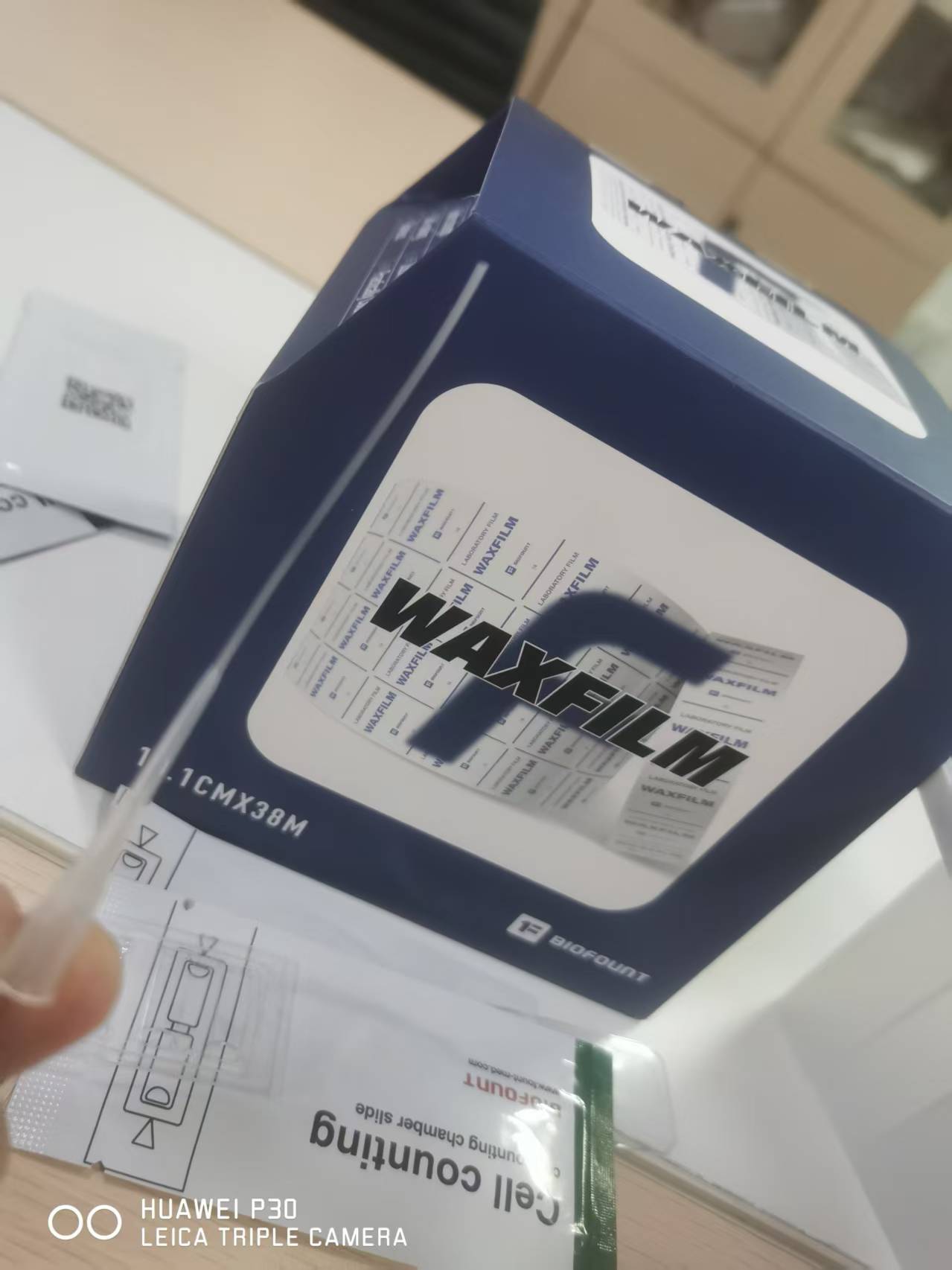
Waxfilm實驗室封口膜的5大突破
Waxfilm實驗室封口膜作為生物功能膜領域的國產技術突破和品牌突破,是生物領域中國技術發展的縮影。
2025/5/6 17:02:07

各種微流控芯片鍵合方法的優缺點
微流控芯片鍵合:目前主要有激光焊接、熱壓鍵合、膠鍵合、超音波焊接,每種方法都有各自的優缺點。本文主要介紹聚酯...
2023/7/28 10:43:09

新一代微流控鍵合解決方案
微流控鍵合解決方案:微流控芯片制造的一個重要環節,也是最容易被忽視的--芯片鍵合。其中一個重要因素是:微流控...
2023/7/27 12:44:28